Sunday, July 3, 2011

Sunday, March 6, 2011
James 5:16
Wednesday, December 22, 2010
The Prodigal Son and Me
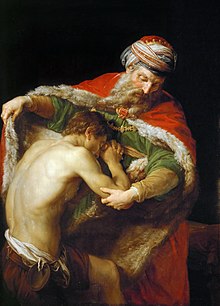 When reading the parable of the prodigal son, who do you consider the lost son representing? Who do you picture the jealous son representing? And who do you think their father represents? Before reading further, honestly consider these questions and answer if you can.
Andrew Skinner, a professor in the Department of Ancient Scripture at BYU, suggests that in the Parable of the Prodigal Son, the prodigal son represents you and me, and his father represents our Father in Heaven. The jealous son also represents you and me. Indeed, Dr. Skinner says, God's "love is not a zero-sum exercise. . . . His love is infinite. He loves me when I think or act like the prodigal son, and He is patient with me when I think or act like the jealous older son. In truth, during our years of mortality, are we not all, even just a little bit, like both the prodigal son and the steady but jealous older brother?" Read the parable (found in Luke 15:11-32) and picture yourself as the prodigal son, and also yourself as the older brother, and his father as your Father in Heaven.
11 And he said, A certain man had two sons:
12 And the younger of them said to his father, Father, give me the portion of goods that falleth to me. And he divided unto them his living.
13 And not many days after the younger son gathered all together, and took his journey into a far country, and there wasted his substance with riotous living.
14 And when he had spent all, there arose a mighty famine in that land; and he began to be in want.
15 And he went and joined himself to a citizen of that country; and he sent him into his fields to feed swine.
16 And he would fain have filled his belly with the husks that the swine did eat: and no man gave unto him.
17 And when he came to himself, he said, How many hired servants of my father’s have bread enough and to spare, and I perish with hunger!
18 I will arise and go to my father, and will say unto him, Father, I have sinned against heaven, and before thee,
19 And am no more worthy to be called thy son: make me as one of thy hired servants.
20 And he arose, and came to his father. But when he was yet a great way off, his father saw him, and had compassion, and ran, and fell on his neck, and kissed him.
21 And the son said unto him, Father, I have sinned against heaven, and in thy sight, and am no more worthy to be called thy son.
22 But the father said to his servants, Bring forth the best robe, and put it on him; and put a ring on his hand, and shoes on his feet:
23 And bring hither the fatted calf, and kill it; and let us eat, and be merry:
24 For this my son was dead, and is alive again; he was lost, and is found. And they began to be merry.
25 Now his elder son was in the field: and as he came and drew nigh to the house, he heard musick and dancing.
26 And he called one of the servants, and asked what these things meant.
27 And he said unto him, Thy brother is come; and thy father hath killed the fatted calf, because he hath received him safe and sound.
28 And he was angry, and would not go in: therefore came his father out, and intreated him.
29 And he answering said to his father, Lo, these many years do I serve thee, neither transgressed I at any time thy commandment: and yet thou never gavest me a kid, that I might make merry with my friends:
30 But as soon as this thy son was come, which hath devoured thy living with harlots, thou hast killed for him the fatted calf.
31 And he said unto him, Son, thou art ever with me, and all that I have is thine.
32 It was meet that we should make merry, and be glad: for this thy brother was dead, and is alive again; and was lost, and is found.
Monday, August 16, 2010
Zion, the Pure in Heart
When young Joseph Smith read James, chapter 1 verse 5 from the Bible, he said, “Never did any passage of scripture come with more power to the heart of man than this did at this time to mine. [JS-H 1:12]”
In their recent annual letter to their stake members, the Moroni Stake Presidency asks, “When was the last time you read or heard a scripture that penetrated your heart and caused you to change your course?”
To aid in fathoming the question, the High Councilors have been asked to a teach in their speaking assignments about their own “Joseph experience” with the scriptures. One of my “Joseph experiences” was during a talk given by Elder D. Todd Christofferson of the Quorum of the Twelve Apostles, entitled “Come to Zion” (Ensign, Nov 2008).
The word Zion has more than one meaning in the scriptures. It is sometimes used to refer to specific geographical locations, such as the city of Enoch (see Moses 7:18–21), the ancient city of Jerusalem (see 2 Samuel 5:6–7; 1 Kings 8:1; 2 Kings 9:28), and the New Jerusalem, which will be built in Jackson County, Missouri (see D&C 45:66–67; 57:1–3; Articles of Faith 1:10).
In the words of Elder D. Todd Christofferson, “Zion is both a place and a people.” Today were going to focus on the “people” part: "the pure in heart" (D&C 97:21). The Lord called Enoch’s people Zion “because they were of one heart and one mind, and dwelt in righteousness; and there was no poor among them” (Moses 7:18). The direct opposite of Zion is Babylon - its worldliness and its worship of evil, combine to make Babylon the symbol of decadent societies and spiritual bondage.
From Elder Christofferson’s talk, “Come to Zion,” Ensign, Nov 2008, 37–40:
“Under the direction of the Prophet Joseph Smith, early members of the Church attempted to establish the center place of Zion in Missouri, but they did not qualify to build the holy city. The Lord explained one of the reasons for their failure [to qualify, but first, when I think of the saints in Joseph Smith’s day, I envision a generally righteous people filled with zeal for the gospel. But the scriptures tell us in D&C 105, verses 3 and 4]:”
“‘They have not learned to be obedient to the things which I required at their hands, but are full of all manner of evil, and do not impart of their substance, as becometh saints, to the poor and afflicted among them;
And are not united according to the union required by the law of the celestial kingdom.’”
[And in D&C 101:6, the Lord says:] “‘There were jarrings, and contentions, and envyings, and strifes, and lustful and covetous desires among them; therefore by these things they polluted their inheritances.’”
“Rather than judge these early Saints too harshly, however, we should look to ourselves to see if we are doing any better.”
[If you’re asking, ‘What makes Zion Zion?’ Elder C has the answer:] “Zion is Zion because of the character, attributes, and faithfulness of her citizens. Remember, ‘the Lord called his people Zion, because they were of one heart and one mind, and dwelt in righteousness; and there was no poor among them’ (Moses 7:18). If we would establish Zion in our homes, branches, wards, and stakes, we must rise to this standard. It will be necessary (1) to become unified in one heart and one mind; (2) to become, individually and collectively, a holy people; and (3) to care for the poor and needy with such effectiveness that we eliminate poverty among us. We CANNOT wait until Zion comes for these things to happen—Zion will come ONLY as they happen.”
Elder C. then teaches us on the three characteristics of Zion mentioned: Unity, Holiness, and Caring for the Poor.
Unity
He speaks of unity being required for Zion to flourish. I like to look words up in the thesaurus. Consider these synonyms for the word “flourish:” amplify, bear fruit, bloom, blossom, develop, multiply, succeed, and thrive.
He suggests we ask ourselves if we have overcome the contentions and envyings in our lives (see D&C 101:6). And examine ourselves to truly see if we are “individually and as a people free from strife and contention . . . ” And he teaches us, “Forgiveness of one another is essential to this unity.” As I pondered that last sentence, I realized that was a new thought for me. “Forgiveness of one another is essential to . . . unity.” Of course, I thought! How can unity exist between two people if complete forgiveness is not a part of their relationship? It really brings to the forefront that forgiveness is an essential part of any positive - and flourishing - relationship.
He continues - and listen to this. “We will become of one heart and one mind as we individually place the Savior at the center of our lives...” Again, I say, ‘Of course!’ A key to being “united according to the union required by the law of the celestial kingdom [D&C 105]” is to “individually place the Savior at the center of our lives.”
Holiness
In the section of his talk on becoming individually and collectively, a holy people, he says that “much of the work to be done in establishing Zion consists in our individual efforts to become “the pure in heart” (D&C 97:21). “Zion [will] be built up [only] by the principles of the law of the celestial kingdom (D&C 105:5) - which principles include our constant remembrance of the Savior and our pledge of obedience, sacrifice, consecration, and fidelity.”
A year before Elder C’s talk, Elder David A. Bednar taught us:
“We are commanded and instructed to so live that our fallen nature is changed through the sanctifying power of the Holy Ghost. President Marion G. Romney taught that the baptism of fire by the Holy Ghost ‘converts [us] from carnality to spirituality. It cleanses, heals, and purifies the soul.’ (Learning for the Eternities, comp. George J. Romney [1977], 133; see also 3 Nephi 27:19–20). Hence, as we are born again . . . ultimately, we are to stand spotless before God.”
Elder C continues on the subject of becoming holy. “The Savior was critical of some of the early Saints for their ‘lustful … desires”’ (D&C 101:6; see also D&C 88:121). These were people who lived in a non-television, non-film, non-Internet, non-iPod world [, he said].” And he asks a poignant question, “In a world now awash in sexualized images and music, are WE free from lustful desires and their attendant evils?” The question is one for each of us to answer on an individual basis.
Then another ‘aha! moment’ struck me when he piercingly teaches: “To come to Zion, it is not enough for you or me to be somewhat less wicked than others.” WOW, I thought, I sometimes make myself feel pretty good about myself by comparing myself to others I hand pick for comparison. He continues, “We are to become not only good but holy men and women.” Elder C. finishes up the section on holiness by “recalling Elder Neal A. Maxwell’s phrase, let us once and for all establish our residence in Zion and give up the summer cottage in Babylon (see Neal A. Maxwell, A Wonderful Flood of Light [1990], 47).”
Caring for the Poor
Here’s food for thought: He says, “Throughout history, the Lord has measured societies and individuals by how well they cared for the poor. ‘...And this not grudgingly, otherwise the abundance of the manifestations of the Spirit shall be withheld (D&C 70:14).’” He continues, “It is gratifying to witness your generosity as you contribute to fast offerings and humanitarian projects. . . . Nevertheless, as we pursue the cause of Zion, each of us should prayerfully consider whether we are doing what we should and all that we should in the Lord’s eyes with respect to the poor and the needy. We might ask ourselves, . . . whether we are remaining aloof from covetousness and the lust to acquire more and more of this world’s goods . . . [this kind of] materialism is just one more manifestation of the idolatry and pride that characterize Babylon. Perhaps we can learn to be content with what is sufficient for our needs.”
The Apostle Paul said, “We brought nothing into this world, and it is certain we can carry nothing out. And having food and raiment let us be therewith content” (1 Timothy 6:7–8).
In much of the world, we are entering upon unsettled economic times. Let us look after one another the very best we can. I remember the story of a Vietnamese family that fled Saigon in 1975 and ended up living in a small mobile home in Provo, Utah. A young man in the refugee family became the home teaching companion to a Brother Johnson who lived nearby with his large family. The boy related the following:
“One day Brother Johnson noticed that our family had no kitchen table. He appeared the next day with an odd-looking but very functional table that fit nicely against the trailer wall across from the kitchen sink and counters. I say odd-looking because two of the table legs matched the tabletop and two did not. Also, several small wooden pegs stuck out along one edge of the worn surface.
“Soon we used this unique table daily for food preparation and for eating some quick meals. We still ate our family meals while we sat on the floor … in true Vietnamese fashion.
“One evening I stood inside Brother Johnson’s front door as I waited for him before a home teaching appointment. There in the nearby kitchen—I was surprised to see it—was a table practically identical to the one they had given to my family. The only difference was that where our table had pegs, the Johnsons’ table had holes! I then realized that, seeing our need, this charitable man had cut his kitchen table in half and had built two new legs for each half.
“It was obvious that the Johnson family could not fit around this small piece of furniture—they probably didn’t fit comfortably around it when it was whole. …
“Throughout my life this kind act has been a powerful reminder of true giving” (Son Quang Le, as told to Beth Ellis Le, “Two-of-a-Kind Table,” Ensign, July 2004, 63).
“We can live as a Zion people, if we wish to. Will it be hard? Of course it will, for the waves of Babylonian culture crash incessantly against our shores. Will it take courage? Of course it will. We have always been entranced by tales of courage of those who faced fearsome odds and overcame. Courage is the basis and foundation for all of our other virtues; the lack of courage diminishes every other virtue that we have.” - David R. Stone, “Zion in the Midst of Babylon,” Ensign, May 2006, 90–93
“And it came to pass that there was no contention in the land, because of the love of God which did dwell in the hearts of the people. And there were no envyings, nor strifes, nor tumults, nor whoredoms, nor lyings, nor murders, nor any manner of lasciviousness; and surely there could not be a happier people among all the people who had been created by the hand of God. There were no robbers, nor murderers, neither were there Lamanites, nor any manner of -ites; but they were in one, the children of Christ, and heirs to the kingdom of God. And how blessed were they! For the Lord did bless them in all their doings; yea, even they were blessed and prospered . . .” - 4 Nephi 1:15-18
And finally, “The Prophet Joseph Smith said, ‘We ought to have the building up of Zion as our greatest object’ (Teachings: Joseph Smith, 186).”
Saturday, July 24, 2010
Prayer

"One of the adversary’s sharpest tools is to convince us that we are no longer worthy to pray. No matter who you are or what you may have done, you can always pray.
"Learn to pray. Pray often. Pray in your mind, in your heart. Pray on your knees. Prayer is your personal key to heaven. The lock is on your side of the veil."
Do All the Commandments Apply to Me?

"When we choose to disobey a commandment, it is usually because (1) we have convinced ourselves that the commandment does not apply to us; (2) we do not believe that it is important; or (3) we are certain that it is too difficult to obey."
- Bruce A. Carlson, “When the Lord Commands,” Ensign, May 2010, 38–40
Wednesday, June 16, 2010
Yield to the Enticings of the Holy Spirit
This is a well known and oft quoted scripture, but it holds a phrase that seems (incredibly) to have heretofore gone unnoticed by me: “ unless he yields to the enticings of the Holy Spirit.”
I usually associate the Holy Spirit with words like strive, prompt, teach, and persuade, but not entice. So that’s a new thought for me. I learned that Spencer J. Condie, taught that the word “entice” is among other “very strong action verbs” that all indicate “a positive influence which the Holy Ghost can have in our lives by actively helping us in our quest for perfection. [ A Mighty Change of Heart, Ensign, Nov 1993]” And I looked up the word entice to see what more I could learn. “Entice” means “to attract artfully . . . by arousing hope or desire [Merriam-Webster Dictionary].”
This gives so much more meaning to me about the mission of the Holy Spirit and has been on my mind almost constantly for several weeks - bringing me more in tune with the Father’s will.
Sunday, April 11, 2010
Becoming a Quality Person Now

All of us must live with proper priorities and purposes. Don’t be harsh in your self-appraisal. Rather, measure yourself by whether or not you are living the gospel of Jesus Christ.
I like the way of life expressed by my friend, Carol Clark, … when she says that the personal challenge is not to wait successfully but to live richly, fully, and joyfully. The goal is not to wait for the right person but to be the right person.
“The real fun of life is in overcoming obstacles while still happily hoping everything will work out. … I freely admit that living with my dreams unfulfilled has proven to be a softening, humbling influence because it’s been so hard. But the anchor is at hand, and because it is, I can progress, even though to date I’ve lost at love—the one thing I’ve wanted more in life than anything else save righteousness itself. …
“Last summer I complained to a non–Latter-day Saint friend that I was exhausted, having no fun, living like an automaton. Nonsympathetically, she countered, ‘What do you think this is? A dress rehearsal? This is your life, Carol. Fix it.’ I expected a pat and a kind word. Instead, I got a splash of reality square in the face. She was, of course, quite right. I wasn’t giving my life value, so I didn’t feel it had value. I went home, reread the parables of the sower and of the talents, and regrouped” (A Singular Life, ed. Carol L. Clark and Blythe Darlyn Thatcher [1987], 35–36).
Brothers and sisters, regroup, if that’s what is needed. Do not wait. Rather fill your life with service, education, personality development, love for all, and other such meaningful traits. Live with purpose each day. … As you strive to become a quality person, commune daily with your Heavenly Father who knows you best of all. He knows your talents, your strengths, and your weaknesses. You are here on the earth at this time to develop and refine these characteristics. I promise you He will help you. He is aware of your needs. He is aware of your unanswered prayers.
Power to Act

Nephi was willing to try time and again, using his best efforts. He expressed faith that he would be helped. He refused to be discouraged. But because he acted, had confidence in the Lord, was obedient, and properly used his agency, he received guidance. He was inspired step after step to success, and in his mother’s words was “given … power [to] accomplish the thing which the Lord hath commanded.” (1 Ne. 5:8; italics added.)
Nephi knew he was required to confide in God, to exercise faith, and to act so that he could receive help, step by step. He did not murmur nor ask for a full explanation. But, observe particularly, he did not wait passively for help. He acted! By following spiritual law, he was inspired and given power to act.
Sunday, March 7, 2010
He Succors Us in Our Afflictions

Wednesday, March 3, 2010
Things that Matter

Saturday, February 20, 2010
Improving Our Prayers

. . .
Do your prayers at times sound and feel the same? Have you ever said a prayer mechanically, the words pouring forth as though cut from a machine? Do you sometimes bore yourself as you pray?
Will prayers that do not demand much of your thought merit much attention from our Heavenly Father? When you find yourself getting into a routine with your prayers, step back and think. Meditate for a while on the things for which you really are grateful. Look for them. They don’t have to be grand or glorious. Sometimes we should express our gratitude for the small and simple things like the scent of the rain, the taste of your favorite food, or the sound of a loved one’s voice.
Thinking of things we are grateful for is a healing balm. It helps us get outside ourselves. It changes our focus from our pains and our trials to the abundance of this beautiful world we live in.
Think of those things you truly need. Bring your goals and your hopes and your dreams to the Lord and set them before Him. Heavenly Father wants us to approach Him and ask for His divine aid. Explain to Him the trials you are facing. Set before Him your righteous desires.
Our prayers can and should be focused on the practical, everyday struggles of life. If we should pray over our crops (see Alma 34:24), then why not over other important challenges we face?
. . .
As we approach our Heavenly Father in the name of Christ, we open the windows of heaven. We can receive from Him truth, light, and knowledge.
Prayer is the doorway through which we commence our discipleship to things heavenly and eternal. We will never be alone so long as we know how to pray.
Friday, February 19, 2010
To Acquire Spiritual Guidance

I am convinced that there is no simple formula or technique that would immediately allow you to master the ability to be guided by the voice of the Spirit. Our Father expects you to learn how to obtain that divine help by exercising faith in Him and His Holy Son, Jesus Christ. Were you to receive inspired guidance just for the asking, you would become weak and ever more dependent on Them. They know that essential personal growth will come as you struggle to learn how to be led by the Spirit.
What may appear initially to be a daunting task will be much easier to manage over time as you consistently strive to recognize and follow feelings prompted by the Spirit. Your confidence in the direction you receive from the Holy Ghost will also become stronger. I witness that as you gain experience and success in being guided by the Spirit, your confidence in the impressions you feel can become more certain than your dependence on what you see or hear.
Spirituality yields two fruits. The first is inspiration to know what to do. The second is power, or the capacity to do it. These two capacities come together. That’s why Nephi could say, “I will go and do the things which the Lord hath commanded. [1 Nephi 3:7]" He knew the spiritual laws upon which inspiration and power are based.
- Richard G. Scott, “To Acquire Spiritual Guidance,” Ensign, Nov 2009, 6–9
Wednesday, February 3, 2010
Power
Saturday, January 30, 2010
Preparation
- Dallin H. Oaks, "Preparation for the Second Coming," Ensign, May 2004, 7
Thursday, January 21, 2010
The Spirit World and the Resurrection of the Dead
I listened to this talk by Robert J. Matthews. I transcribed it myself because I couldn't find a written form and I wanted to share it with you. I think it is an accurate transcription, but any punctuation and spelling errors are mine alone. I put the words here that I thought were the most interesting or thought provoking or powerful. Where you see three dots (...) you will know I left out parts of his talk that were less interesting or thought provoking or powerful. If you listen while you read, you may disagree with my editing - so be it. I felt like I couldn't put all his words in here - this post is long enough as it is. You can listen to it here, or here or here. Listening time is about 38 minutes. I believe you will find it worth your time.
 The Spirit World and the Resurrection of the Dead
- Robert J. Matthews, BYU Education Week, August 21, 2007
Since I am not a spokesman for the church I will quote those who are or who were in their day, and though I cite the scriptures and the brethren correctly, the organization of this talk and the arrangement and the context are mine. So I alone am responsible for what I am about to say. I firmly believe that what I am going to say is gospel truth. It's based upon latter-day revelation and also the bible. ... First we need to know that all things are governed by law. ... Not only humans, but all forms of life are governed by law. All things have privledges and all things are preserved by the law. ... The laws of God are usually user-friendly, and they were given in kindness to enable His children to advance in glory. ... God Himself, finding He was in the midst of spirits and glory, because He was more intelligent, saw proper to institute laws whereby the rest could have the privledge to advance like Himself. He has power to institute laws to instruct the weaker intelligences that they may be exalted with Himself. Now there are some progressive steps in this long journey. From our birth as a spirit until be become resurrected beings is a long, progressive journey in which each one of us is already involved. There are at least four major phases to this journey. First, un-embodied - that's a pre-earth spirit having never received a body of flesh and bones - we call it the "first estate." The second is embodied - that's a spirit temporarily connected to a physical body - that's our present earth life, and it's called second estate. [Third,] Then there's disembodied - that's a spirit that's temporarilly separated from the physical body through death. The spirit is alive in the post-mortal spirit world, waiting for the resurrection. And then the fourth one, re-embodied - that's the permanent reunion of the spirit and the body in the resurrection. Although there is intellectual and spiritual growth as we move along these steps, there is a constancy of both purpose and individuality. In other words, we are the same person as we go along, we just improve - hopefully. A spirit is immortal and is not dependent upon a physical body for life, but it can benefit from the experience of living in a body. ... Now we need to talk a little bit about our life in the pre-mortal world - the un-embodied state. ... God [has] shape, size and form as a man. He is a perfect spirit, permanently connected with a perfect physical body of flesh and bones. Every human being is a first generation spirit daughter or son of this supremely gracious, powerful, holy, and knowledgable God. ... The term Heavenly Parents that's used in [The Proclamation on the Family] indicates that we have a Heavenly Mother as well as a Heavenly Father. ... Now let's talk about the nature of spirits. Spirits are made of refined spirit element, and as the literal offspring of Heavenly Parents, each human spirit has form, size, shape in the image of God, with all the parts, the features, organic structure common to a physical body. Or in other words, the physical body has all of the features of the spirit body. ... Each one of us had a pre-mortal life as an itelligent, active, social, individual spirit with our own personality before our birth into this mortal world. We had agency and will power; we had a wide range of emotions, character traits, and accomplishments, including decision making ability, and accountability. That life was neither bland, listless, nor languid for it appears to me that good and bad, virtues and vises, all that are known to us in mortality except murder - since spirits do not die, so there was no murder in the pre-earth life. ... Among individual spirits there was then and there is now a great variety of intelligence, activity, faith, and ambition. ... We would certainly expect that an experienced, orderly, knowledgable, and caring Heavenly Father would understand the necessity of serious training to be given to His spirit children - that He would provide a plan - some system for them to advance and become like Himself. ... This plan [God's Plan of Salvation,] if followed, would enable the spirits to become like God. That's a long-term project. It has huge proportions. It has high adventure. And great expectations, and is, what the scriptures call "the work and the glory of God." Now we need to talk about the Grand Council. "Grand Council" is a term often used by the Prophet Joseph Smith to describe the setting for official, top-level, priesthood functions in the pre-earth life. The plan of God was introduced and taught in many meetings over an extended period of time - collectively called the Grand Council. Most spirits happily accepted the plan, and shouted for joy at the opportunity to become like God. They understood that it was far beyond their very best efforts, and that they could succeed only by the absolute redemption that would be provided by Jesus Christ, their Redeemer. The entire plan from beginning to end ... everything - was explained in the Grand Council. We knew that we would need the gospel and the blessings of Christ's atonement in every one of those four categories that we've talked about in that long journey. ... The established order of the kingdom was made known, and men and women were foreordained and appointed to carry it out here upon the earth. This seems to be what the Prophet Joseph Smith was getting at when he said, "The great thing for us to know is to comprehend what God did institute before the foundation of the world." Now the prophet says that's the great thing for us to begin to understand - that this was all mapped out and understood in the pre-mortal world - and we were there. ... I suppose we each were given at least a glimpse of what we would encounter here in this mortal world. And we still wanted to come. Now there was a war in heaven. ... President Hinckley said, "That war, so bitter, so intense, has never ceased. It is the war between truth and error, between agency and compulsion, between the followers of Christ and those who have denied Him." President Hinckley also observed, "that many who aligned themselves with the Lord Jesus Christ in pre-mortality have betrayed, in life, the decision they once made when the great war occurred in heaven." Now we need to talk a little bit about our present earth life - the embodied state. One giant leap for mankind within the Father's plan is for each spirit to be born into mortality to obtain a physical body. This is absolutely necessary if a spirit is ever to become like God, since God has a real body of flesh and bones. ... In addition to being a place to get a physical body, earth life is also a probationary time called the second estate - in which man still has agency; still has will power; and decision making ability, but also accountability. ... In Doctrine and Covenants 93:33-34, the Lord said that a spirit without a resurrected body cannot have a fulness of joy. Now here are the exact words, "For man is spirit. The elements are eternal, and spirit and element, inseparably connected, receive a fulness of joy; and when separated, man cannot receive a fulness of joy." Now as mortals, we have only a temporary connection between body and spirit. The revelation says we need to be inseparably connected. This is the resurrected condition. Getting a mortal body was the first step, death was the second step, and resurrection is the final step. ... The awful limitations placed upon the devil and his angels. The necessity for and the desirability of having a body was fully explained to all the spirits preparing to come to earth. Yet Lucifer and a third part of the spirits rejected the Father's offer. They rebelled against the Father and against Christ. They abandoned the plan with it's opportunities for advancement. Lucifer and his followers were cast out of heaven and put down on the earth in their spirit form without birth; without bodies of flesh and bones; and were denied the privledge of ever having bodies. The consequence of their choice is that they are stopped in their progress. Not having a body means not having a lot of other things too: never a fullness of joy; never become like God; never have a posterity. They will remain in their first estate. ... [The prophet Joseph Smith said,] "The great principle of happiness consists of having a body. The devil has no body, and herein is his punishment. He is pleased when he can obtain the tabernacle of man, and when cast out by the Saviour he asks to into a herd of swine, showing he would prefer a swine's body to having none." ... "And they who keep their first estate shall be added upon; and they who keep not their first estate shall not have glory in the same kingdom with those who keep their first estate; and they who keep their second estate shall have glory added upon their heads for ever and ever." [Abraham 3:26] Now to be added upon means growth, progress, improvement, and happiness. It means to receive body and everything else that's involved with having a body. It means obtaining all other blessings of the gospel. And those blessings do not just add up, but they multiply up in intensity and in volume. It's no wonder the heavens wept over Lucifer when he fell. ... Now let's go to the post-mortal spirit world - the disembodied state. ... Our immortal spirit continues as an intelligent, thinking, conscious individual. We'll now consider the location, the purpose, the opportunities of the important but temporary realm of disembodied spirits. If you know anyone who has passed away, this is where they are. First, preaching the gospel in the spirit world. Many scriptures conote the lifestyle of disembodied spirits, but probably none more clearly than the vision of the spirit world that was given to Joseph F. Smith on the 3rd of October, 1918 in Salt Lake City. That's now section 138 of our Doctrine and Covenants. The revelation describes the visit of the Lord Jesus Christ to the spirit world as a disembodied spirit, after His death on the cross while His body was still in the tomb. The spirits of all who had died while on this earth from the time of Adam through forty centuries were all in that spirit world and were very much alive. The righteous spirits from Adam on down were assembled and eagerly awaiting for Jesus' arrival in the spirit world. The spirits of the wicked were also in the spirit world, but they didn't come to thew meeting. Jesus organized a mission among the righteous spirits, and set in motion the preaching of the gospel to the other spirits - that is spirits teaching spirits. The thrust of the revelation is missionary work in the spirit world. But that could not be possible unless spirits were alive and conscious and alert. ... Number two. Where is the spirit world? President Brigham Young spoke marvelous things: "Where is the spirit world? It is right here. Do the good and the evil spirits go together? Yes they do. Do they both inhabit one kingdom? Yes they do. Do they go beyond the boundaries of the organized earth? No, they do not." So when you die you're not going anywhere, you see - not very far anyway. ... Spirits are just as familiar with spirits as bodies are with bodies. They walk, converse, and have their meetings. And when you are in the spirit world, everything there will appear natural as things now do. Now there are varying conditions in that spirit world. The prophet Joseph Smith explained, "Hades or Sheol, these two significations (?) mean the world of spirits. Hades, Sheol, paradise, spirits in prison, are all one. It is a world of spirits. The righteous and the wicked all go to the same world of spirits until the resurrection." ... As birds of a feather flock together, so spirits seek their own groups with whom they feel most comfortable. Thus different states of mind lead to different self-imposed social gatherings just as we see occur in our earth life. However - this is important - President Brigham young explained that if we die firm in the faith of Jesus Christ the devil and wicked spirits will have no influence over our spirits. Whereas all others, when they die will still be subject to temptation. Now returning to the presence of God - that's item number four. The prophet Alma states that at death the spirits of all men, whether they be good or evil will be taken home to their God who gave them life (Alma 40:11). This needs a little clarification. Elder Joseph Fielding Smith explained: "These words of Alma, as I understand them, do not intend to convey the thought that all spirits go back into the presence of God. 'Taken home to God,' simply means that their mortal existence has come to an end, and they have returned to the world of spirits." President George Q. Cannon said that Alma "does not intend to convey the idea that they are immediately ushered into the personal presence of God [Gospel Truth, 58]." Now I'd like to talk to you about the spirit world environment - this is number five. When President Jedediah M. Grant, who was a counselor to President Brigham Young, was near death in 1856, the other counselor in the First Presidency, President Heber C. Kimball, visited him at home. President Grant told President Kimball that his spirit had recently been in the spirit world and had now returned to earth, and he told President Kimball what he had seen there. Now the following is an excerpt of Brother Kimball's discourse at brother Grant's funeral just a few days later. "He said that people he there saw were organized in family capacities, and in perfect harmony. He said that the people he there saw were organized in family capacities; and when he looked at them he saw grade after grade, and all were organized and in perfect harmony. He would mention one item after another and say, 'Why, it is just as brother Brigham says it is; it is just as he has told us many a time.' This is a testimony as to the truth of what brother Brigham teaches us. He said, when I looked at families there was a deficiency in some, there was a lack; for I saw families that would not be permitted to come and dwell together because they had not honored their calling here. The temple erected by Solomon was much inferior to the most ordinary buildings he saw in the spirit world. I have seen good gardens on this earth, but I never saw any to compare with those that were there. I saw flowers of numerous kinds, and some with from fifty to a hundred different colored flowers growing upon one stalk." That's from Journal of Discourses, Volume 4, verses 135-137. Now item number six - three hours in the spirit world. At about ten o'clock, on March the 3rd, 1891, Ella Jensen, a nineteen year old woman living near Brigham City, Utah, passed away after a lingering illness. Lorenzo Snow, President of the Quorum of the Twelve, also lived in Brigham City, and immediatly after the girl's death, her parents notified Brother Snow. Upon arriving at the Jensen home, President Snow felt that the young woman had not completed her mortal mission, even though she had been dead then nearly two hours, and he administered to her, commanding her in the name of the Lord to return to mortality. He then left the Jensen home to attend to some other business. About one hour later - it didn't happen immediately - one hour later, as the family and friends still mourned her death, Ella finally opened her eyes, looked around the room and said, "Where is President Snow?" Sister Jensen's account of her three hour visit included many things. Visiting with departed ancestors and other relatives and friends; she talked about how happy and busy everyone was in the spirit world; how beautiful the spirit world is. It was while happily visiting in the spirit world, she distinctly heard President Snow call her by name, and told her to return to earth. She liked being in the spirit world, and she took her time coming back - an hour - took her time before she slipped back into her mortal body. Now she later married, gave birth to eight children, and lived totally, after this event, for another sixty-five years. Number seven. We might well expect that Lazarus and others of old times who had been restored to mortal life, would have similar things to tell about the spirit world, especially Lazarus, because he had been in the spirit world four days already before Jesus brought him back. He'd be a very interesting fireside speaker. Number eight. The long absence from the body is a type of bondage. Disembodied spirits will eventually long to be reunited with the body [D&C 138:50]. That is, they'll long for a resurrected body. Not for the worn out, tired, weakened mortal body. Both President Grant and Sister Jensen specifically noted that they were reluctant to return to the mortal, ailing body; and did so more of duty than as choice. Number nine. When will our pre-earth memory be restored to us? I think it's a general feeling among our people that your pre-mortal life memory is restored to you as soon as you die. But in the absence of a categorical statement of when our pre-mortal memory will be activated, I don't expect it will occur before our resurrection. There would probably be no need for it to occur to the general run of mankind before the resurrection and the final judgement. Number ten -a personal observation. We are all moving toward the world of spirits. The spirit world is an extension of our earth life. Our ancestors and departed family and friends who are already there know that we will join them eventually. They are aware of us - they probably pray for us. Now some questions. When we go, will we remember our mortal life? Does this church exist there? And if so, does it have the same name that it has here? How could the answers be otherwise than yes, yes, and yes to these questions. Now the resurrection of the dead - the re-embodied state. We now come to the last segment of man's journey, the resurrection from the dead. Resurrection is mankind's final condition; permanent and all-inclusive. No man woman or child will be left behind. ... I will now touch upon a few essential features of the resurrection that have been revealed in the scriptures and the teachings of the prophets. Resurrection is necessary because of the fall of Adam. The resurrection of mankind is made possible only because of the atonement and resurrection of Jesus Christ. He alone has the power to overcome the effects of the fall of Adam, which brought death of the body and also death of the spirit. Now death of the body I call the cemetery death. Death of the spirit doesn't mean the spirit dies, but it means to be separated from the presence of God. Death actually means separation. The body is separate from the spirit and the spirit and the body are separated from God in spiritual death. ... Resurrection is governed by divine law. Although everyone will receive a resurrection, it will not all happen at the same time, nor with the same glory. Like everything else in the kingdom of God, the resurrection is governed by divine law, and there is order and there is timing. The righteous first, the others later. All of the righteous before any of the wicked. So far on this earth, only celestial resurrections have take place, and there are still a lot more of those yet to come. Resurrection is a priesthood ordinance. ... The Plan of Restoration - and I'd like to emphasize that I feel like this is very, very, important. What we call resurrection is part of the larger plan of restoration. You must have noticed that in Alma's discussion of the resurrection in Alma chapters 40 and 41, he uses the words restoration and restored to explain what resurrection is. Alma regarded the resurrection as a restoration of the actual body. He was not talking about replacement or substitution. Restoration is an eternal law. ... The law of resurrection and restoration preserves the particles of our body and will restore them to our spirit. ... We first wanted a glorious resurrection when we were in our first estate and saw the beautiful and perfect bodies of our Heavenly Parents. It was in that far distant past that our spirits learned the value of flesh and bones, and yearned for such a body, that we could become like God. We have been working toward that ultimate goal ever since. The glory of the resurrection of Jesus Christ as our great example has been in our hearts in every phase of our existance, from pre-mortal to mortal and will be in the post-mortal and onward, right up to the moment of our resurrection. ... Now a personal comment about resurrection. It is my conviction that all human beings are created in the express image of the bodies of our Heavenly Parents. Our spirit body and our physical body resemble each other and each has the corresponding parts, features, organs, and likeness that the other has. These are also the features of the bodies of our Heavenly Parents. Resurrected bodies have size, shape, weight, and they occupy space. They have every limb, joint, hair, and body parts that are natural to the physical body. And they enjoy never ending youth without sickness or pain. They eat, drink, digest food, and have bodily warmth. They have spirit fluid in their veins instead of red blood, and they do not require sleep. ... Everything that has a spirit, everything that has had breath, and everything that has died on this earth shall be resurrected. It is all because of Jesus: He said, "I am the resurrection." Now many resurrected beings have visited this earth. The personal visits of the Father, the Son, Moroni, John the Baptist, Peter, James, Moses, Elijah, and many others who visited the prophet Joseph Smith were all resurrected beings.
Tuesday, December 8, 2009
2 Nephi 31:20
Joseph B. Wirthlin relates, “While traveling along a mountainous road one evening through a driving rainstorm punctuated with frequent claps of thunder and flashes of lightning, Sister Wirthlin and I could barely see the road, either in front of us or to the right and the left. I watched the white lines on that road more intently than ever before. Staying within the lines kept us from going onto the shoulder and into the deep canyon on one side and helped us avoid a head-on collision on the other. To wander over either line could have been very dangerous. Then I thought, ‘Would a right-thinking person deviate to the left or the right of a traffic lane if he knew the result would be fatal? If he valued his mortal life, certainly he would stay between these lines.’ That experience traveling on this mountain road is so like life. If we stay within the lines that God has marked, he will protect us, and we can arrive safely at our destination.” [Joseph B. Wirthlin, “The Straight and Narrow Way,” Ensign, Nov 1990]
We’ve all heard of baptism referred to as the “gate.” Using that symbolism, upon entering the gate we find ourselves on the “straight and narrow path” - the same path that Jesus said of, “and few there be that find it” [ Matthew 7:14]. Well it’s good news that those who have been baptized HAVE found the path.
Quoting from Elder Jeffrey R. Holland in last month’s General Conference [“Safety for the Soul,” Ensign, Nov 2009], “In Lehi’s dream an already difficult journey gets more difficult when a mist of darkness arises, obscuring any view of the safe but narrow path his family and others are to follow. It is imperative to note that this mist of darkness descends on all the travelers—the faithful and the determined ones (the elect, we might even say) as well as the weaker and ungrounded ones.”
And you’ll recall that the path, according to Lehi’s vision, leads to the Tree of Life, or the “love of God” - as we learned in Primary - and that the “love of God” is the most desirable above all things [ 1 Ne 11:22] and the most joyous to the soul [v. 23]. And the fruit of the tree is Eternal Life - the greatest gift anyone could ever receive - and the greatest that God can give.
You remember from the vision, Lehi (and soon after, Nephi) saw “numberless concourses of people” (1 Nephi 8:21). These people can be divided into four categories based on their actions in seeking the tree and the fruit. Keep in mind that the “great and spacious building” represented the world, the wisdom of the world, and the pride of the world [ 1 Nephi 11:35-36].
Listen and see where you may fit in.
The first category of people includes those who never start on the path but instead go directly toward the great and spacious building.
The second are those who start on the path but then become lost in the mist of darkness - which represents temptations - because they do not hold on to the Iron Rod - or do not continually feast upon the Word of God.
The third group are those who hold to the rod until they reach the tree and partake of the fruit, but then become ashamed and fall away because of the scoffing and mocking of the world that they pay heed to - and as a consequence, they stop feasting upon the word - or let go of the iron rod - and leave the fold of God, joining those who left their spiritual life behind for a worldly life in that Great and Spacious Building.
Elder Dale G. Renlund relates this personal story: “Because of my schedule, I had become casual with my prayers and scripture study. I would get up one morning, say my prayers, and go to work. Often day blended into night and into day again before I would return home late the following evening. I would then be so tired that I would fall asleep before saying a prayer or reading the scriptures. The next morning the process began again. The problem was that I was not doing the basic things I needed to do to keep my mightily changed heart from turning to stone. I got off the couch, got on my knees, and pleaded with God for forgiveness. I promised my Heavenly Father that I would change. The next day I brought a Book of Mormon to the hospital. On my to-do list that day, and every day since, were two items: praying at least morning and evening and reading in the scriptures. Sometimes midnight would come, and I would have to quickly find a private place to pray. Some days my scripture study was brief. I also promised Heavenly Father that I would always try to get to church, even if I missed part of the meeting. Over the course of a few weeks, the zeal returned and the fire of testimony burned fiercely again. I promised to never again fall into the spiritual death trap of being casual about these seemingly small actions and thereby jeopardizing things of an eternal nature, regardless of circumstances. To endure to the end, we need to be eager to please God and worship Him with fervor and passion.” [“Preserving the Heart’s Mighty Change,” Ensign, Nov 2009]
The last group in the “numberless concourses of people” are those who hold to the rod until they reach the tree and partake of the fruit, and who then remain faithful - enduring to the end.
Elder Holland again, “the successful travelers resist all distractions, including the lure of forbidden paths and jeering taunts from the vain and proud who have taken those paths. The record says that the protected ‘did press their way forward, continually [and, I might add, tenaciously] holding fast’ to a rod of iron that runs unfailingly along the course of the true path. However dark the night or the day, the rod marks the way of that solitary, redeeming trail.”
[Jeffrey R. Holland, “Safety for the Soul,” Ensign, Nov 2009]
So, brothers and sisters, when we are baptized, and allow the love of God to infuse our very soul, feasting upon His word, and endure to the end we receive Eternal Life. Eternal Life can be defined as ‘God’s Life,’ which he hopes to share with all his children - Eternal Life is the same quality of life that God currently enjoys, with all the rights, powers, and authority that He has.
Or in other words, we will have “all that [our] Father hath [see D&C 84:38].” You see, the more we press forward on the path, the closer we get to the tree of life, the more we become like God - which is the whole purpose of the commandments He has given us. As we become like God, He will grant unto us Eternal Life.
When we have true faith (which could be simply defined as confidence or trust in God), when we exercise sincere repentance, and make a baptismal covenant, we actually receive the Holy Ghost as our companion. This reception of the Holy Ghost changes our heart and completes our spiritual rebirth - we become born again and receive a remission of our sins. We were warned, however, in our last General Conference that “Enduring to the end can be challenging because the tendency of the natural man is to reject the spiritually changed heart and allow it to harden. No wonder the Lord cautioned to “even let those who are sanctified take heed.”5
We all know of individuals who had this mighty change of heart but subsequently yielded to the natural man. They became casual in their worship and devotion to God, their hearts became hardened, and they thereby jeopardized their eternal salvation.”
“We cannot stand idly by, being merely an interested spectator...” - Delbert L. Stapley, “The Path to Eternal Life,” Ensign, Jan 1974
We must press forward steadfastly.
The dictionary defines Steadfast as “Firmly fixed in place.” “Determination.”
The thesaurus offers some synonyms that are helpful: “ardent, constant, dependable, enduring, faithful, intent, relentless, reliable, resolute, unbending, wholehearted.”
In the book of Second Nephi [2 Nephi 31:19], the great prophet Nephi poses a question:
“And now, my beloved brethren, after ye have gotten into this strait and narrow path [through the gate of baptism], I would ask if all is done?”
He then answers his own question [in verses 19 and 20]: “Nay.” [Paraphrasing, ] You’ve made it to baptism by the word of God - and unshaken faith in Jesus - relying completely upon Him.
“Wherefore, ye must press forward with a steadfastness in Christ, having a perfect brightness of hope, and a love of God and of all men. Wherefore, if ye shall press forward, feasting upon the word of Christ, and endure to the end, behold, thus saith the Father: Ye shall have eternal life.”
2 Nephi 31:20
Press Forward with a Steadfastness in Christ
“The words press forward seem to indicate moving with . . . dedication along the path of perfection despite adversity or distraction.” See 2 Nephi 31:20
Friday, November 13, 2009
The Power of Covenants
"In the covenant path we find a steady supply of gifts and help. 'Charity never faileth' (1 Corinthians 13:8; Moroni 7:46), love begets love, compassion begets compassion, virtue begets virtue, commitment begets loyalty, and service begets joy. We are part of a covenant people, a community of Saints who encourage, sustain, and minister to one another. As Nephi explained, 'And if it so be that the children of men keep the commandments of God he doth nourish them, and strengthen them' (1 Nephi 17:3).2
"All this is not to say that life in the covenant is free of challenge or that the obedient soul should be surprised if disappointments or even disasters interrupt his peace. If you feel that personal righteousness should preclude all loss and suffering, you might want to have a chat with Job."
- D. Todd Christofferson, “The Power of Covenants,” Ensign, May 2009
Wednesday, November 11, 2009
Moral Discipline
 ". . . We all possess the God-given gift of moral agency—the right to make choices and the obligation to account for those choices (see D&C 101:78) [, and] for positive outcomes, moral agency must be accompanied by moral discipline.
"By 'moral discipline,' I mean self-discipline based on moral standards. Moral discipline is the consistent exercise of agency to choose the right because it is right, even when it is hard. It rejects the self-absorbed life in favor of developing character worthy of respect and true greatness through Christlike service (see Mark 10:42–45). The root of the word discipline is shared by the word disciple, suggesting to the mind the fact that conformity to the example and teachings of Jesus Christ is the ideal discipline that, coupled with His grace, forms a virtuous and morally excellent person.
"Jesus’s own moral discipline was rooted in His discipleship to the Father. To His disciples He explained, 'My meat is to do the will of him that sent me, and to finish his work' (John 4:34). By this same pattern, our moral discipline is rooted in loyalty and devotion to the Father and the Son."
